Marissa DuBois in Slow Motion Full Fashion Week 2023, Fashion Channel Vlog,

Tuesday, May 10, 2011

Transport in Norway

Due to the low population density, narrow shape and long coastlines, public transport in Norway is less developed than in many European countries, especially outside the cities. As such, Norway has old water transport traditions, but the Norwegian Ministry of Transport and Communications has in recent years implemented rail, road and air transport through numerous subsidiaries in order to develop the country's infrastructure. Most recently there has been discussion of the possibility of created a new high-speed rail system between the nation's largest cities.
NSB type 73 at Oslo Central Station, the largest railway station in the country.
Norway's main railway network consists of 4,114 kilometres (2,556 mi) of standard gauge lines, of which 242 kilometres (150 mi) is double track and 64 kilometres (40 mi) high-speed rail (210 km/h) while 62% is electrified at 15 kV 16⅔ Hz AC. The railways transported 56,827,000 passengers 2,956 million passenger kilometres and 24,783,000 tonnes of cargo 3,414 million tonne kilometres. The entire network is owned by the Norwegian National Rail Administration, while all domestic passenger trains except the Airport Express Train are operated by Norges Statsbaner (NSB). Several companies operate freight trains.
Investment in new infrastructure and maintenance is financed through the state budget, and subsidies are provided for passenger train operations. NSB operates long-haul trains, including night trains, regional services and four commuter train systems, around Oslo, Trondheim, Bergen and Stavanger.
There are approximately 92,946 kilometres (57,754 mi) of road network in Norway, of which 72,033 kilometres (44,759 mi) are paved and 664 kilometres (413 mi) are motorway. There are four tiers of road routes; national, county, municipal and private, with only the national roads numbered en route. The most important national routes are part of the European route scheme, and the two most prominent are the E6 going north-south through the entire country, while E39 follows the West Coast. National and county roads are managed by the Norwegian Public Roads Administration.
Of the 97 airports in Norway, 52 are public, and 46 are operated by the state-owned Avinor. Seven airports have more than one million passengers annually. 41,089,675 passengers passed through Norwegian airports in 2007, of which 13,397,458 were international.
The central gateway by air to Norway is Oslo Airport, Gardermoen, located about 50 kilometres (31 mi) north of Oslo with departures to most European countries and some intercontinental destinations. It is hub for the two major Norwegian airlines Scandinavian Airlines System and Norwegian Air Shuttle, and for regional aircraft from Western Norway.

Economy of Norway

Norwegians enjoy the second highest GDP per-capita (after Luxembourg) and fourth highest GDP (PPP) per-capita in the world. Today, Norway ranks as the second wealthiest country in the world in monetary value, with the largest capital reserve per capita of any nation. According to the CIA World Factbook, Norway is a net external creditor of debt. Norway maintained first place in the world in the UNDP Human Development Index (HDI) for six consecutive years (2001–2006) and then reclaimed this position in 2009 and 2010. Cost of living is about 30% higher in Norway than in the United States and 50% higher than the United Kingdom. The standard of living in Norway is among the highest in the world. Foreign Policy Magazine ranks Norway last in its Failed States Index for 2009, judging Norway to be the world's most well-functioning and stable country. Continued oil and gas exports coupled with a healthy economy and substantial accumulated wealth lead to a conclusion that Norway will remain among the richest countries in the world in the foreseeable future.
The Norwegian economy is an example of a mixed economy, a prosperous capitalist welfare state featuring a combination of free market activity and large state ownership in certain key sectors. The Norwegian welfare state makes public health care free (above a certain level), and parents have 46 weeks paid parental leave. The income that the state receives from natural resources includes a significant contribution from petroleum production and the substantial and carefully managed income related to this sector. Norway has a very low unemployment rate, currently 3.1%. 30% of the labour force are employed by the government, the highest in the OECD. 22% are on welfare and 13% are too disabled to work, the highest proportions in the world. The hourly productivity levels, as well as average hourly wages in Norway are among the highest in the world.citation needed The egalitarian values of the Norwegian society ensure that the wage difference between the lowest paid worker and the CEO of most companies is much smaller than in comparable western economies.citation needed This is also evident in Norway's low Gini coefficient. The state has large ownership positions in key industrial sectors, such as the strategic petroleum sector (Statoil and Aker Solutions), hydroelectric energy production (Statkraft), aluminium production (Norsk Hydro), the largest Norwegian bank (DnB NOR), and telecommunication provider (Telenor). Through these big companies, the government controls approximately 30% of the stock values at the Oslo Stock Exchange. When non-listed companies are included, the state has even higher share in ownership (mainly from direct oil license ownership). Norway is a major shipping nation and has the world's 6th largest merchant fleet, with 1,412 Norwegian-owned merchant vessels.
Referendums in 1972 and 1994 indicated that the Norwegian people wished to remain outside the European Union (EU). However, Norway, together with Iceland and Liechtenstein, participates in the European Union's single market via the European Economic Area (EEA) agreement. The EEA Treaty between the European Union countries and the EFTA countries– transposed into Norwegian law via "EØS-loven"– describes the procedures for implementing European Union rules in Norway and the other EFTA countries. This makes Norway a highly integrated member of most sectors of the EU internal market. However, some sectors, such as agriculture, oil and fish, are not wholly covered by the EEA Treaty. Norway has also acceded to the Schengen Agreement and several other intergovernmental agreements between the EU member states.

Military of norway

Norwegian Armed Forces currently numbers about 23,000 personnel, including civilian employees. According to the current (as of 2009) mobilization plans, the strength during full mobilization is approximately 83,000 combatant personnel. Norway has conscription for males (6–12 months of training) and voluntary service for females. The Armed Forces are subordinate to the Norwegian Ministry of Defence and the Commander-in-Chief is King Harald V. The military of Norway is divided into the following branches: the Army, the Royal Navy, the Royal Air Force and the Home Guard.
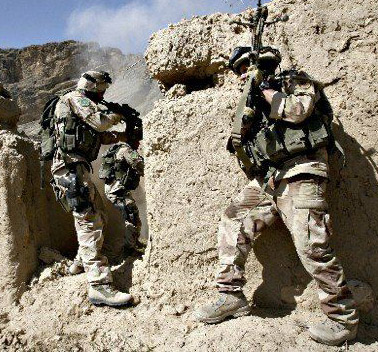
Partly due to Norway's failure to maintain its traditional policy of neutrality in World War II (joining the Allied war effort after being invaded by Nazi Germany in April 1940), the country was one of the founding nations of the North Atlantic Treaty Organization (NATO) on 4 April 1949. At present, Norway contributes in the International Security Assistance Force (ISAF) in Afghanistan. Additionally, Norway has contributed in several missions in contexts of the United Nations, NATO, and the Common Security and Defence Policy of the European Union.

Crime control in Norway

Norway uses a civil law system where laws are created and amended in Parliament and the system regulated through the Courts of Justice of Norway. It consists of the Supreme Court of 19 permanent judges and a Chief Justice, appellate courts, city and district courts, and conciliation councils. The judiciary, although traditionally a third branch of government, is independent of executive and legislative branches. While the Prime Minister nominates Supreme Court Justices for office, their nomination must be approved by Parliament and formally confirmed by the Monarch in the Council of State. Usually, judges attached to regular courts are formally appointed by the Monarch on the advice of the Prime Minister.
The Courts' strict and formal mission is to regulate the Norwegian judicial system, interpret the Constitution, and as such implement the legislation adopted by Parliament and monitor the legislative and executive powers to ensure that they themselves comply with the acts of legislation that have been previously adopted.
Law enforcement in Norway is carried out by the Norwegian Police Service. The Norwegian Police Service is a Unified National Police Service made up of 27 Police Districts and several specialist agencies like Økokrim and Kripos, each headed by a Chief of Police. The Police Service is headed by the National Police Directorate, which in turn is subordinate to the Ministry of Justice and the Police, the Police Directorate is headed by a National Police Commissioner. The only exception is the Norwegian Police Security Agency who answers directly to the Ministry of Justice and the Police.
In its 2007 Worldwide Press Freedom Index, Reporters Without Borders ranked Norway at a shared 1st place (with Iceland) out of 169 countries. The death penalty was abolished in Norway in 1902. Death penalty for high treason in war and war-crimes was also abolished in 1979. Currently, Norway has the lowest homicide rate in the world.

Politics of Norway

According to the Constitution of Norway, which was adopted on 16 May 1814 and inspired by the United States Declaration of Independence and French Revolution of 1776 and 1798, respectively, Norway is a unitary constitutional monarchy with a parliamentary system of government, wherein the King of Norway is the head of state and the Prime Minister is the head of government. Power is separated between the legislative, executive and judicial branches of government, as defined by the Constitution, which serves as the country's supreme legal document.
The Monarch officially retains executive power, however, following the introduction of a parliamentary system of government, the duties of the Monarch have since become strictly representative and ceremonial, such as the formal appointment and dismissal of the Prime Minister and other ministers in the executive government. Accordingly, the Monarch is commander-in-chief of the Norwegian armed forces, supreme authority in the Church of Norway, and serves as chief diplomatic official abroad and a symbol of unity.
In practice, it is the Prime Minister who is responsible for the exercise of executive powers. Since his accession in 1991, Harald V of the House of Schleswig-Holstein-Sonderburg-Glücksburg has been King of Norway, the first since the 14th century who has actually been born in the country. Haakon, Crown Prince of Norway is the legal and rightful heir to the throne and the Kingdom.
Constitutionally, legislative power is vested with both the government and the Parliament of Norway, but the latter is the supreme legislature and a unicameral body.[51] A proposition can become a law or an act by simple majority amongst the 150 representatives, who are elected on the basis of proportional representation from 19 constituencies for four-year terms. An additional 19 seats ("levelling seats") are allocated on a nationwide basis to make the representation in parliament correspond better with the popular vote.
As a result, there are currently 169 Members of Parliament altogether. There is also a 4% election threshold to gain levelling seats in Parliament. As such, Norway is fundamentally structured as a representative democracy. Effectively called the Storting, meaning Grand Assembly, members of Parliament ratify treaties and can impeach members of the government if their acts are declared unconstitutional, and as such have the power to remove them from office in case of an impeachment trial.
The position of Prime Minister, Norway's head of government, is allocated to the Member of Parliament who can obtain the confidence of a majority in Parliament, usually the current leader of the largest political party or more effectively through a coalition of parties, as a single party normally does not have the support to form a government on its own. However, Norway has often been ruled by minority governments.
The Prime Minister nominates the Cabinet, traditionally drawn from members of the same political party in the Storting, to which they are responsible, and as such forms the executive government and exercises power vested to them by the Constitution.[52] In order to form a government, however, more than half the membership of the Cabinet is required to belong to the Church of Norway. Currently, this means at least ten out of the 19 ministries. This has sparked controversy regarding an ongoing debate of separation of church and state in Norway. The current Prime Minister is Jens Stoltenberg, the leader of the Norwegian Labour Party (AP).

Norway

Norway, officially the Kingdom of Norway, is a Nordic country in Northern Europe occupying the western portion of the Scandinavian Peninsula, as well as Jan Mayen, the Arctic archipelago of Svalbard and Bouvet Island (is not subject to the Antarctic Treaty). Norway has a total area of 385,252 square kilometres (148,747 sq mi) and a population of about 4.9 million. It is the second least densely populated country in Europe. 

The majority of the country shares a border to the east with Sweden; its northernmost region is bordered by Finland to the south and Russia to the east; in its south Norway borders the Skagerrak Strait, across which Denmark is situated. The capital city of Norway is Oslo. Norway's extensive coastline, facing the North Atlantic Ocean and the Barents Sea, is home to its famous fjords.

In prehistoric times, Norway was originally inhabited by pre-Indo-European Hunter-gatherer cultures. Towards the end of the 3rd millennium BC these were overrun by Proto-Indo-European speaking Battle-Axe peoples, an individualistic and patriarchal culture who shared resemblances with the Siberian Afanasevo culture. These people, who are believed to be the earliest ancestors of modern Norwegians, brought domesticated horses, agriculture, cattle and wheel technology to the region. During the Nordic Bronze Age, an advanced Proto-Norse speaking civilization engaged in maritime trade and manufacturing of bronze weapons and gold jewellery emerged in coastal Norway. It has been assumed that this civilization was founded in amber trade, through contacts with Central European and Mediterranean cultures. 

Following the Pre-Roman Iron Age and the Barbarian invasions, Harald I of Norway unified the Norse petty kingdoms under one Norwegian King, after being victorious at the The Battle of Hafrsfjord in the Viking age 880s. Two centuries of Viking raids into Europe, and colonization of Iceland, Greenland, North America, Britain and Eastern Europe tapered off following the decline of Norse paganism with the the adoption of Christianity by King Olav Tryggvason in 994, and the subsequent battle of Stiklestad in 1030. During The Black Death, approximately 60% of the population died, resulting in a period of social and economic decline for the already sparsely populated Kingdom. Thus, in 1397, Norway was absorbed into a union with Denmark. Under influence from the Danes and the Hanseatic league, the Norwegian West Norse language gradually became extinct. In 1814, following Denmark-Norway's defeat in the Napoleonic Wars, the Norwegians resisted the cession of their country to Sweden and adopted a new constitution. Sweden then invaded Norway but agreed to let Norway keep its constitution in return for accepting the union under a Swedish king. Rising nationalism throughout the 19th century led to a 1905 referendum granting Norway independence. Although Norway remained officially neutral in World War I, they cooperated mildly with the British, resulting in heavy losses to the country's shipping industry. Norway proclaimed its neutrality at the outset of World War II, but was nonetheless occupied for five years by Nazi Germany (1940–45). In 1949, neutrality was abandoned and Norway became a member of NATO. 

Discovery of oil and gas in adjacent waters in the late 1960s boosted Norway's economic fortunes. In referenda held in 1972 and 1994, Norway rejected joining the EU. Key domestic issues include immigration and integration of ethnic minorities, maintaining the country's extensive social safety net with an aging population, and preserving economic competitiveness.

Norway is a unitary parliamentary democracy and constitutional monarchy, with King Harald V as its head of state and Jens Stoltenberg as its prime minister. It is a unitary state with administrative subdivisions on two levels known as counties (fylker) and municipalities (kommuner). The Sámi people have a certain amount of self-determination and influence over traditional territories through the Sámi Parliament and the Finnmark Act. Although having rejected European Union membership in two referenda, Norway maintains close ties with the union and its member countries, as well as with the United States. Norway remains one of the biggest financial contributors to the United Nations, and participates with UN forces in international missions, notably in Afghanistan, Kosovo, Sudan and Libya. 

Norway is a founding member of the United Nations, NATO, the Council of Europe, and the Nordic Council, a member also of the European Economic Area, the WTO,the OECD and is a part of Schengen Area.
Norway has extensive reserves of petroleum, natural gas, minerals, forests, seafood, fresh water, and hydropower. It is the world's largest producer of oil and natural gas per capita outside of the Middle East, and the petroleum industry accounts for around a quarter of the Gross domestic product. The country maintains a Scandinavian welfare model with universal health-care, subsidized higher education, and a comprehensive social security system. From 2001 to 2007, and then again in 2009 and 2010, Norway had the highest human development in the world.